
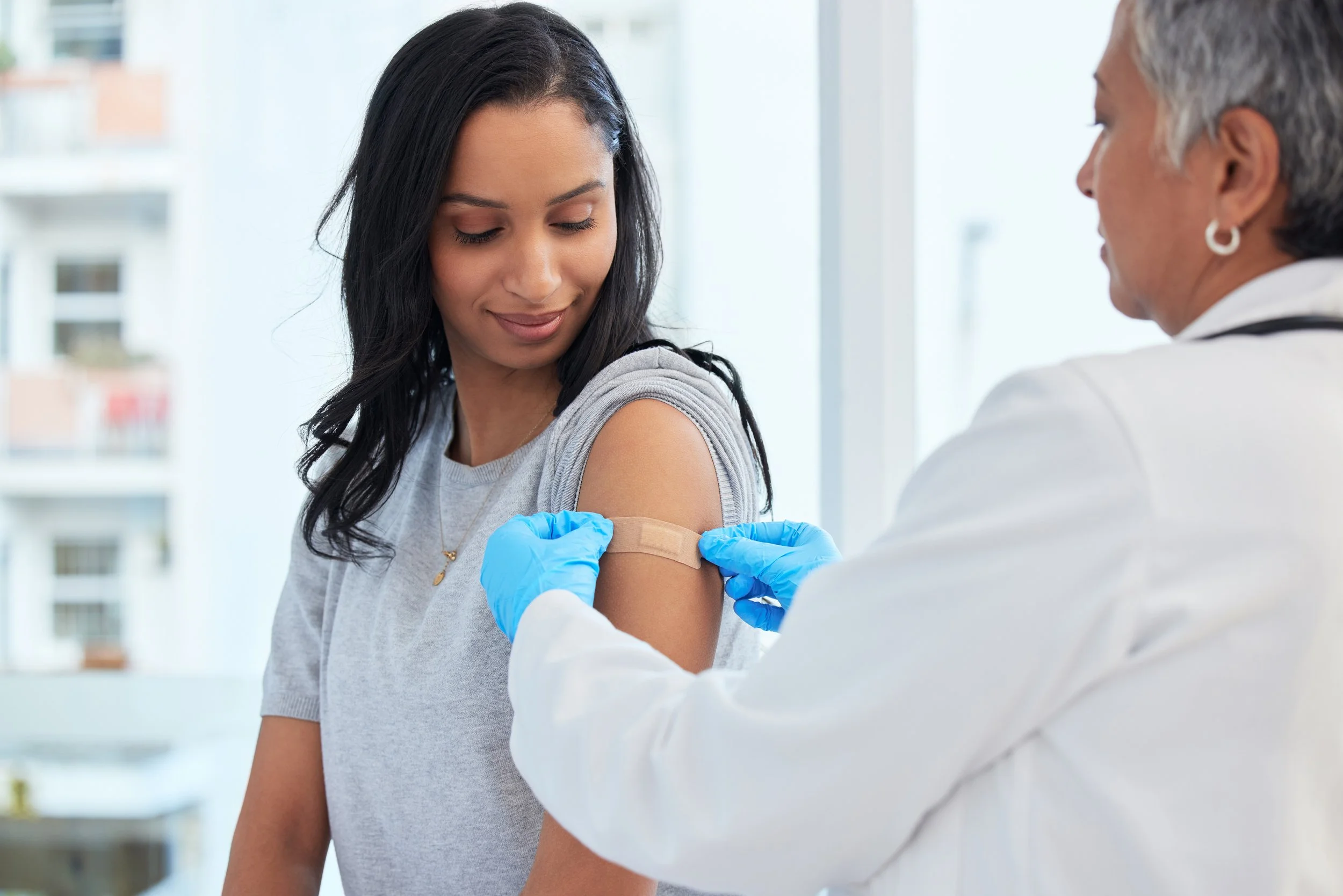
Tdap Vaccine
Learn how getting the Tdap vaccine between 27 and 32 weeks of pregnancy helps protect your baby against serious infections like pertussis (whooping cough) after they are born.
Quick Facts
-

The Tdap vaccine protects against three infections in one shot.
It helps protect you and your baby from tetanus, diphtheria, and pertussis (whooping cough). Pertussis is especially dangerous and even life-threatening for newborn babies.
-

Tdap is recommended between 27-32 weeks.
The Tdap vaccine is given as a single shot between 27 and 32 weeks of pregnancy. This gives your body time to make protective antibodies and pass them to your baby before birth.¹⁻²
-

Vaccination in pregnancy protects your baby.
When you get vaccinated during pregnancy, your body produces infection-fighting antibodies that pass through the placenta to your baby, giving them early protection until they are old enough for their own vaccinations.
-

Tdap vaccination helps prevent serious illness in babies.
Getting the Tdap vaccine during pregnancy can protect 9 out of 10 babies under 3 months old from pertussis (whooping cough). It also lowers the risk of your baby needing care in a hospital or NICU.
-

The Tdap vaccine is safe for you and your baby.
Research from around the world shows that the Tdap vaccine does not increase the risk of miscarriage, preterm birth, stillbirth, low birth weight, or birth defects. It is safe and effective during pregnancy.
-
You need a Tdap vaccine during every new pregnancy.
Even if you had the Tdap vaccine before, you need another dose (shot) in each new pregnancy to protect your baby. The Tdap vaccine is free for all pregnant people in Canada.¹
About Pertussis
Pertussis—commonly known as whooping cough—is a serious infection caused by bacteria. It affects the nose, throat, and lungs (your respiratory tract). Pertussis irritates your airways and leads to thick mucus and long, severe coughing fits. These fits often end with a sharp gasp for air that can sound like a “whoop.”
While pertussis can affect people of all ages, it’s very dangerous for newborn babies. The most severe cases of pertussis often happen in babies who are too young to get vaccinated.¹ When older children or adults get pertussis, they can pass it to babies who haven’t been vaccinated.²⁻³

-
Pertussis can be very serious and even life-threatening for young babies. Along with severe coughing, it can cause babies to stop breathing for short periods. This is called apnea. When this happens, a baby may turn blue because they are not getting enough oxygen.
Newborn babies are at the highest risk of complications and death from pertussis. Research shows:
Babies under 3 months old who develop serious cases of pertussis have the highest risk of death.4-7
Babies who develop a severe case of pertussis usually develop pneumonia (a lung infection) which can lead to other serious problems like low blood pressure, organ failure, and even death.7
Intense coughing and breathing problems can lower oxygen levels in the brain, leading to seizures or even permanent brain damage.8
Fortunately, you can protect your baby from pertussis by getting the Tdap vaccine during pregnancy.
-
Adults, including pregnant people, can get pertussis. In most cases, the illness is less severe, but it can still cause prolonged coughing fits that may lead to vomiting, cracked ribs, disturbed sleep, fainting, or loss of bladder control (incontinence).9 Even though pertussis is typically less serious for adults, it can easily be passed to newborns who are not yet vaccinated.
While being pregnant doesn’t increase your chances of getting pertussis, it can make it harder to recover if you do get sick. Changes to the immune system, lungs, and heart during pregnancy can make symptoms worse. You may feel more tired, have a higher fever, or have more trouble breathing, which adds stress to your body during pregnancy.
-
In Canada, pertussis affects anywhere between 1,000 to 3,000 people each year.10 Globally, there are an estimated 20-40 million cases annually and 400,000 people will die from pertussis.10
Pertussis is most dangerous for babies under 1 year old, especially if they haven’t been vaccinated.10,11
-
The best way to protect your baby from pertussis in the first few months of life is to get vaccinated during pregnancy. In Canada, the pertussis vaccine for pregnant people is combined with two other vaccines in a single shot, known as the Tdap vaccine.
When you get the Tdap vaccine, your body produces protective antibodies that help your immune system recognize and fight the bacteria that cause pertussis.
During pregnancy, these antibodies are passed to your baby through the placenta, giving them early protection until they are old enough to get their own vaccine starting at 2 months old. This early protection is especially important because young babies are at the highest risk of getting seriously ill from pertussis.
Studies show that 9 out of 10 babies under 3 months old are protected from pertussis if their parent received the Tdap vaccine during pregnancy.12,13
About Tetanus
Tetanus is a serious infection caused by bacteria found in places like soil, dust, and the feces (poop) of humans and animals. The bacteria make a toxin (poison) that affects the nerves that control your muscles.¹⁴ This toxin causes your muscles to tighten and spasm.
A common name for tetanus is "lockjaw" because it often makes the jaw muscles so tight and painful that it becomes hard to open your mouth. This can make it difficult to eat, swallow, or even breathe. Without proper treatment, tetanus can be very serious and even life-threatening.

-
Tetanus is not contagious, which means it does not spread from person to person like the flu or a cold. Tetanus bacteria live in places like dirt, dust, and animal or human feces (poop). The bacteria can enter the body through cuts or wounds, especially if the skin is broken and not properly cleaned. This includes injuries from things like rusty nails, broken glass, burns, or frostbite. Anyone who is not vaccinated is at risk of getting tetanus.
Tetanus can affect pregnant people and newborns if germs enter the body during childbirth. This can happen when clean tools and proper care are not available. For example, using an unsterilized tool to cut the umbilical cord or covering the cord with a dirty cloth can introduce tetanus bacteria. This can lead to neonatal tetanus, a dangerous and sometimes deadly infection in newborns.15 Neonatal tetanus is rare in Canada, but it still occurs in some parts of the world where people may not have access to routine vaccinations or clean, safe birth practices.15
Thanks to routine vaccination, neonatal tetanus is now extremely rare worldwide. In most countries, pregnant individuals can receive a tetanus-fighting vaccine before giving birth to protect both themselves and their babies.
-
When tetanus affects newborns, it is called neonatal tetanus. It is especially dangerous because babies’ immune systems are still developing.16 Signs of neonatal tetanus often begin within the first 2 weeks of life and can include:
Trouble feeding or constant crying
Stiff muscles and spasms — babies may have jerky movements or seizures, sometimes triggered by bright lights or loud noises
Trouble breathing as the chest muscles tighten
Neonatal tetanus is very serious. If you notice any of these signs, it is important to seek medical care right away. With quick treatment, many babies can recover.
-
Adults who are not vaccinated are more likely to get tetanus. Symptoms usually appear 3 to 21 days after the bacteria enter the body.15 These symptoms include:
Stiffness or locking of the jaw (lockjaw)
Muscle stiffness in the neck and body
Painful muscle spasms
Trouble swallowing
Fever, sweating, and high blood pressure
While being pregnant doesn’t increase your chances of getting tetanus, it can make it harder to recover if you do get sick. Changes to the immune system, lungs, and heart during pregnancy can make symptoms worse.
-
Tetanus is rare in Canada thanks to routine vaccination. Most people in Canada are protected, but those who are not vaccinated are still at risk. Tetanus is more common in countries where fewer people are vaccinated and where healthcare access is limited.
-
The most effective way to protect your baby from tetanus in the first few months of life is to get vaccinated while you are pregnant. In Canada, the tetanus vaccine is part of the Tdap vaccine, which also protects against diphtheria and pertussis (whooping cough).
When you get the Tdap vaccine, your body produces protective antibodies that protect you against the tetanus bacteria.
During pregnancy, these antibodies pass through the placenta and help protect your baby until they can get their own vaccine starting at 2 months old.
About Diphtheria
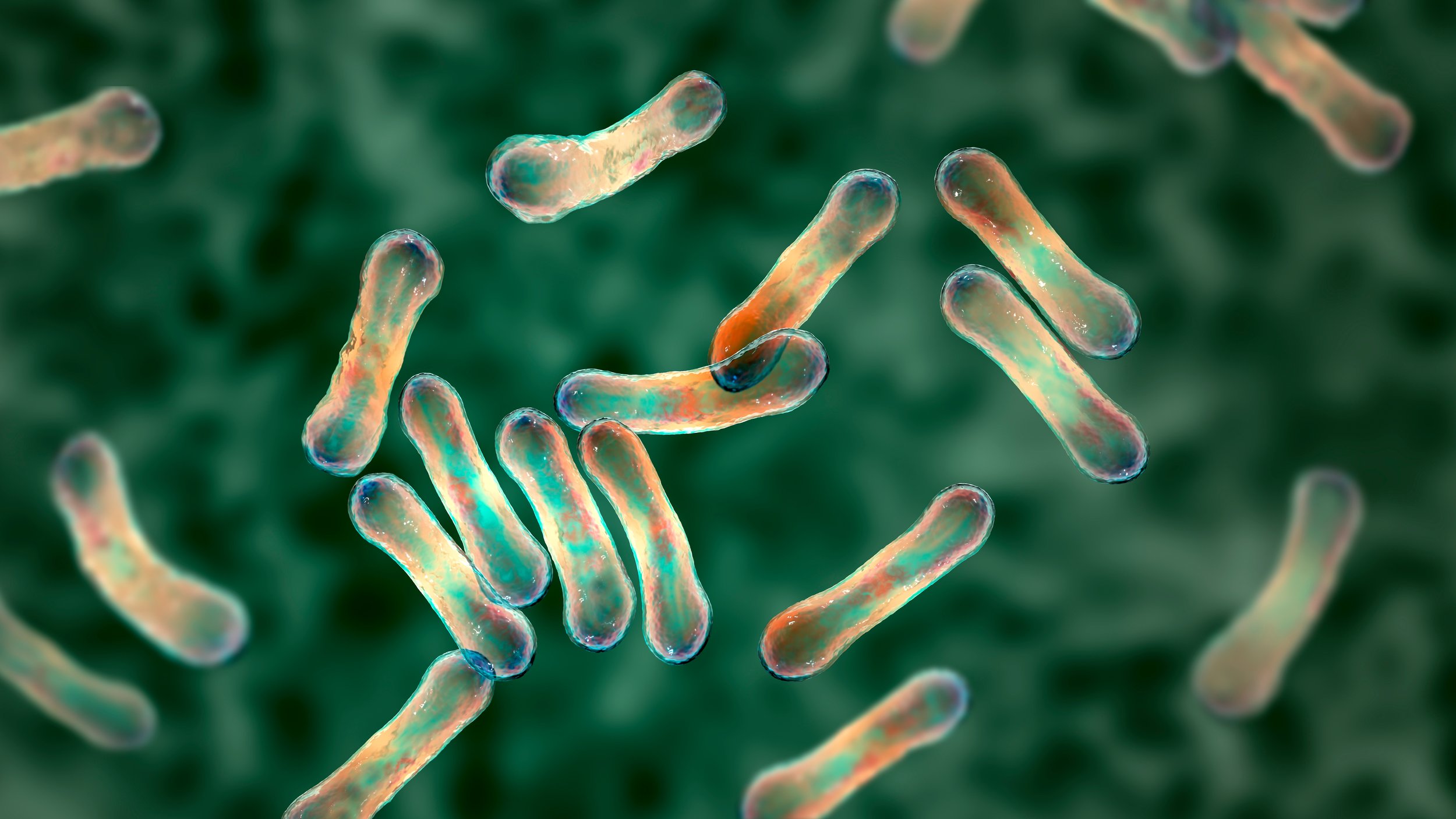
Diphtheria is a serious bacterial infection that usually affects the throat and nose, but it can also cause sores or a rash on the skin.¹⁷ The bacteria produce a toxin (poison) that can spread through the body and damage vital organs, including the heart, nerves, and kidneys.
A classic sign of respiratory diphtheria is a thick, grey coating that forms in the back of the throat, nose, or tonsils. This coating can block the airway, making it difficult to breathe or swallow. In some cases, the infection can lead to muscle weakness or temporary paralysis (difficulty moving parts of the body).¹⁷ Without treatment, diphtheria can be life-threatening, especially for babies and very young children.
-
Diphtheria is very contagious, meaning it can spread easily from person to person. It spreads through the air when an infected person coughs, sneezes, or talks. It can also spread by touching a surface or object (like a toy) that has the bacteria on it, or having close skin-to-skin contact with someone who is infected.17 Luckily, diphtheria is easily preventable through vaccination.
-
Anyone can get diphtheria, but it is especially dangerous for newborn babies and very young children. Before vaccines were available, diphtheria was one of the leading causes of death among Canadian children under the age of five.17
Common signs and symptoms of diphtheria in babies include:
A thick, gray or white coating in the throat, nose, or on the tongue
Sore throat
Fever
Runny nose
Trouble breathing
These symptoms usually appear 2 to 5 days after infection.17 If your baby shows any of these signs, it is important to contact a doctor or healthcare provider right away. Diphtheria is serious but can be treated with medicine if caught early.
-
Adults who are not vaccinated are at risk of getting diphtheria. Symptoms usually appear 2 to 5 days after exposure, but some people don’t experience any symptoms at all. Common symptoms in adults include:
A thick, gray or white coating in the throat, nose, or on the tongue
Sore throat
High fever
Trouble breathing or swallowing
In some cases, diphtheria can cause temporary muscle paralysis (difficulty moving parts of the body). It can also cause skin infections, such as rashes or open sores (ulcers).17 If diphtheria is not treated, the toxin can spread and damage important organs like the heart, kidneys, and nerves. This can lead to serious complications and may be life-threatening.
While being pregnant doesn’t increase your chances of getting diphtheria, it can make it harder to recover if you do get sick. Changes to the immune system, lungs, and heart during pregnancy can make symptoms worse. You may feel more tired, have a higher fever, or have more trouble breathing, which adds stress to your body during pregnancy.
-
Diphtheria is rare in Canada because most people are vaccinated against it. However, it can still happen, especially in people who have not had their routine vaccines. Diphtheria is more common in countries where access to vaccination is limited.
-
The best way to protect your baby from diphtheria in the first few months of life is to get vaccinated during pregnancy. In Canada, the diphtheria vaccine is included in the Tdap vaccine, which also protects against tetanus and pertussis (whooping cough).
When you get the Tdap vaccine, your body produces protective antibodies that help your immune system recognize and fight the bacteria that cause diphtheria.
These antibodies are passed to your baby through the placenta, giving them early protection until they are old enough to get their own vaccine starting at 2 months old.
About the Tdap Vaccine
-
The Tdap vaccine acts like a practice run for your body’s natural defences, also known as your immune system. It helps your body safely learn how to recognize and fight the harmful bacteria that cause tetanus, diphtheria, and pertussis (whooping cough), without the risks of getting the real infection.
Here’s how it works:
The vaccine contains inactivated (dead) parts of the bacteria, called antigens. These antigens are not alive, so they cannot cause disease.
When you receive the vaccine, your body sees these antigens as a threat and starts building protective antibodies to fight them off.
These antibodies stay in your body and can quickly respond if you’re exposed to the real bacteria in the future.
During pregnancy, these protective antibodies pass to your baby through the placenta. This gives them early protection from pertussis, tetanus, and diphtheria during the first few months after birth, when they are most vulnerable.
It usually takes about two weeks for your body to start producing antibodies after vaccination. During pregnancy, it may take slightly longer. That’s why the recommended time to get the Tdap vaccine is between 27 and 32 weeks of pregnancy. This gives your body enough time to make antibodies and pass them to your baby.
See video: How Vaccines Protect Moms and Babies
See infographic: How Flu and Tdap Vaccines Work
-
When you get vaccinated, your body makes protective antibodies that help your body recognize and fight off the different bacteria that cause tetanus, diphtheria, and pertussis. During pregnancy, these protective antibodies pass through the placenta to your baby. This gives them early protection against tetanus, diphtheria and pertussis during their first few months of life, when they are most vulnerable to serious illness.
Getting the Tdap vaccine between 27 and 32 weeks of pregnancy gives your body enough time to produce protective antibodies and pass them to your baby. However, the Tdap vaccine can be given as early as 13 weeks and right up until the time of delivery in some cases. For example, if there’s a chance you might give birth early (before 37 weeks), your healthcare provider may recommend getting the Tdap vaccine earlier in your pregnancy to make sure your baby is protected when they are born.
See video: How Vaccines Protect Moms and Babies
See infographic: How Flu and Tdap Vaccines Work
-
The Tdap vaccine is very effective. In Canada, the Tdap vaccine is recommended during pregnancy to protect newborns from pertussis (whooping cough), which remains common in Canada and can be especially dangerous in the first few months of life. The vaccine also protects against tetanus and diphtheria.
Studies show that 9 out of 10 babies whose parent received the Tdap vaccine during pregnancy are protected from pertussis during their first 2 to 3 months of life.12,13,18
Babies born to a parent who was vaccinated during pregnancy are also less likely to be hospitalized with pertussis. If they are hospitalized, they are less likely to need intensive care and tend to have shorter hospital stays.19

When you get the Tdap vaccine during pregnancy, you pass protective antibodies to your baby that help protect them from pertussis (whooping cough) after birth.
Tdap Vaccine Safety
-
Yes. Research from around the world shows that the Tdap vaccine is safe and effective for both pregnant individuals and their babies.18,19
The Tdap vaccine is an inactivated vaccine. This means it contains only tiny, harmless pieces of the different germs that cause tetanus, diphtheria, and pertussis.
These pieces have been killed or made inactive, so they cannot cause infection or make you or your baby sick.
Inactivated vaccines, like the flu vaccine and Tdap, are safe to receive during pregnancy.
-
No. Studies have shown that getting the Tdap vaccine during pregnancy does not increase the risk of complications or health problems in pregnant people or their babies. Research20-22 on the Tdap vaccine during pregnancy shows:
No increased risk of preterm birth (before 37 weeks)
No increased risk of stillbirth or neonatal death (death in the first 28 days of life)
No increased risk of low birth weight or babies being small for gestational age
No increased risk of birth defects
-
No. You cannot get tetanus, diphtheria, or pertussis from the Tdap vaccine because it does not contain any live bacteria.
Instead, the vaccine includes inactivated parts of the bacteria that help train your immune system to recognize and fight the real germs if you are exposed in the future. Since these pieces are not alive, they cannot make you or your baby sick.
Vaccines that do contain ‘live’ germs, like the MMR (measles-mumps-rubella) vaccine, are not recommended to people during pregnancy.
-
Serious side effects from the Tdap vaccine are extremely rare. One rare reaction is called anaphylaxis, which is a severe allergic reaction that can cause symptoms like swelling, hives, and trouble breathing.
Anaphylaxis happens in about one in a million people who get a vaccine.23
When it does occur, it usually happens within minutes of the vaccine being given. That’s why you're asked to stay at the clinic or pharmacy for at least 15 minutes after getting vaccinated—so that trained healthcare providers can act quickly if needed.
See Infographic: Tdap Vaccine: Benefits & What to Expect
-
The only medical reason for not getting the Tdap vaccine is if you've had a severe allergic reaction to a part of the Tdap vaccine in the past. If you've experienced an allergic reaction to the Tdap vaccine (or any other vaccine) before, make sure to discuss it with your healthcare provider.
See Infographic: Tdap Vaccine: Benefits & What to Expect

Vaccine Reactions
After getting vaccinated, some people may experience mild, short-term side effects. These usually last from a few hours to a couple of days. It’s important to remember that these symptoms are normal and a sign that your body is building immunity (protection) against the disease.
Most people who get the Tdap vaccine do not have any side effects. If side effects do happen, they are usually mild and go away on their own within 12 to 24 hours. These reactions can be easily managed at home.
-
Many people who get the Tdap vaccine during pregnancy don’t experience any side effects. When side effects do happen, they’re usually mild and go away on their own within a day or two.
Common side effects include:
Redness or soreness at the injection site: Around 7 out of every 100 people experience some redness, tenderness, or soreness where the needle went in.24 This is known as a local reaction, and it’s a normal sign that your body is building protection. You can help relieve any soreness by applying a cool, damp cloth to the area or taking an over-the-counter pain reliever, such as acetaminophen (Tylenol), if needed.
Headache: Around 3 out of every 100 people experience a headache after vaccination.24 It will usually go away on its own within a day or two. If needed, you can take acetaminophen (Tylenol) to help you feel more comfortable.
Mild fever: About 2 out of every 100 people develop a low-grade fever (around 38.5°C or less) after vaccination.24 If this happens, drink plenty of fluids and consider taking acetaminophen (Tylenol) to help bring your temperature down and make you more comfortable. If you feel very unwell or your fever doesn’t go away, contact your healthcare provider.
Always check with your healthcare provider before taking any pain medications during pregnancy.
See Infographic: Tdap Vaccine: Benefits & What to Expect
-
Serious reactions to the Tdap vaccine during pregnancy are very rare.
Around 3 in every 1,000 people experience a reaction serious enough to need medical care from a doctor or hospital.24 When this happens, symptoms are usually treated quickly by healthcare professionals, and both the parent and baby recover fully.
A very small number of people may have a severe allergic reaction, called anaphylaxis. This is an extremely rare condition—occurring in about one in a million people who receive a vaccine.24 Anaphylaxis can cause symptoms like swelling, hives, difficulty breathing, low blood pressure, or (in rare cases) shock. These reactions usually happen within minutes of getting the vaccine, which is why you are asked to stay at the clinic or pharmacy for 15 minutes after your shot. Healthcare providers are trained to manage these reactions immediately if they happen.
See Infographic: Tdap Vaccine: Benefits & What to Expect
-
If your symptoms last longer than a couple of days, or if you are worried about how you feel after your vaccination, you can call your doctor or get help by calling the toll-free health information and advice phone service available in your province/territory:
For British Columbia, Alberta, Saskatchewan, Ontario, Quebec, New Brunswick, Nova Scotia, Newfoundland and Labrador, New Brunswick, Prince Edward Island, the Yukon, the Northwest Territories: Call 811
For Manitoba: Call 1-888-315-9257
For Nunavut: Call 211
You can also get help by visiting your nearest emergency department or urgent care centre. If you develop any serious symptoms that you think could be an allergic reaction after your vaccination, call emergency services right away by dialling 911.
Vaccine Timing
-
The Tdap vaccine can be given as early as 13 weeks and right up until the time of delivery. However, we know that it works best if given at least four weeks before birth.1
For the strongest protection, the National Advisory Committee on Immunization (NACI) recommends getting the Tdap vaccine between 27 and 32 weeks of pregnancy.1 This gives your body enough time to build protective antibodies and pass them to your baby through the placenta. These antibodies help protect your baby from the moment they are born and during their first few months of life, when they are most vulnerable.
If you are at risk for preterm birth (before 37 weeks), your healthcare provider may recommend getting the Tdap vaccine earlier in your pregnancy to make sure your baby is protected when they are born.
-
Yes. It is recommended that you get the Tdap vaccine during every new pregnancy, even if you have received it before. This is because the protection provided by the vaccine fades over time. A new dose is needed in each pregnancy to make sure your baby gets the best possible protection.
-
Choosing to wait until after your baby is born to get the Tdap vaccine means your baby won't be protected against pertussis at birth.
If you get vaccinated while breastfeeding, your baby will get some antibodies from your breastmilk, but this protection isn't as strong as the protection they would get from the antibodies that cross the placenta during pregnancy. Getting the Tdap vaccine at the recommended time during pregnancy has been shown to be 85% more effective than vaccination after pregnancy.19
Your body also takes a couple weeks to make these protective antibodies after you get the vaccine. This means your baby won’t have this extra layer of protection for at least the first few weeks after you give birth.
This is why flu, Tdap, RSVpreF and COVID-19 vaccines are highly recommended during pregnancy. The protective antibodies that your body makes are passed to your baby through the placenta, giving them protection starting the moment they’re born.
The best time to get the Tdap vaccine is between 27 and 32 weeks of pregnancy, so your body has time to make protective antibodies and pass them to your baby.
Remember, protection for YOU means protection for TWO!
Additional Information
-
Yes. Getting your family members vaccinated against pertussis is particularly important because about 80% of babies that catch pertussis get it from parents or siblings.2
Anyone likely to be in close contact with your baby, including other parents, siblings and grandparents, should also be fully vaccinated. Siblings should have their vaccinations up to date, and any adults who have not had a Tdap vaccination in the last ten years or longer should get a booster dose.
-
Depending on where you live, you can get a Tdap vaccination at a pharmacy, public health clinic or travel clinic. Your family doctor may also offer vaccinations. It is recommended to check with your local health department or healthcare provider for more information on where to get a Tdap vaccination in your area. You can also contact the toll-free health information and advice phone service available in your province/territory to find out more information:
For British Columbia, Alberta, Saskatchewan, Ontario, Quebec, New Brunswick, Nova Scotia, Newfoundland and Labrador, New Brunswick, Prince Edward Island, the Yukon, the Northwest Territories: Call 811
For Manitoba: Call 1-888-315-9257
For Nunavut: Call 211

Getting the Tdap vaccine during pregnancy gives your baby early protection against pertussis until they are old enough to get their own vaccinations.
Key Facts
-
1. National Advisory Committee on Immunization. Update on Immunization in Pregnancy with Tetanus Toxoid, Reduced Diphtheria Toxoid and Reduced Acellular Pertussis (Tdap) Vaccine. Canada: Public Health Agency of Canada (PHAC); 2018 [updated 2019-10-09]. Available from: https://www.canada.ca/en/public-health/services/publications/healthy-living/update-immunization-pregnancy-tdap-vaccine.html.
2. Wiley KE, Zuo Y, Macartney KK, McIntyre PB. Sources of pertussis infection in young infants: a review of key evidence informing targeting of the cocoon strategy. Vaccine. 2013;31(4):618-25. 10.1016/j.vaccine.2012.11.052.
3. Bertilone C, Wallace T, Selvey LA. Finding the 'who' in whooping cough: vaccinated siblings are important pertussis sources in infants 6 months of age and under. Commun Dis Intell Q Rep. 2014;38(3):E195-200.
4. Winter K, Zipprich J, Harriman K, Murray EL, Gornbein J, Hammer SJ, et al. Risk Factors Associated With Infant Deaths From Pertussis: A Case-Control Study. Clinical infectious diseases : an official publication of the Infectious Diseases Society of America. 2015;61(7):1099-106. 10.1093/cid/civ472.
5. Murray EL, Nieves D, Bradley JS, Gargas J, Mason WH, Lehman D, et al. Characteristics of Severe Bordetella pertussis Infection Among Infants </=90 Days of Age Admitted to Pediatric Intensive Care Units - Southern California, September 2009-June 2011. J Pediatric Infect Dis Soc. 2013;2(1):1-6. 10.1093/jpids/pis105.
6. Halperin SA, Wang EE, Law B, Mills E, Morris R, Dery P, et al. Epidemiological features of pertussis in hospitalized patients in Canada, 1991-1997: report of the Immunization Monitoring Program--Active (IMPACT). Clinical infectious diseases : an official publication of the Infectious Diseases Society of America. 1999;28(6):1238-43. 10.1086/514792.
7. Mikelova LK, Halperin SA, Scheifele D, Smith B, Ford-Jones E, Vaudry W, et al. Predictors of death in infants hospitalized with pertussis: a case-control study of 16 pertussis deaths in Canada. The Journal of pediatrics. 2003;143(5):576-81. 10.1067/S0022-3476(03)00365-2.
8. Olsen M, Thygesen SK, Ostergaard JR, Nielsen H, Henderson VW, Ehrenstein V, et al. Hospital-Diagnosed Pertussis Infection in Children and Long-term Risk of Epilepsy. JAMA. 2015;314(17):1844-9. 10.1001/jama.2015.13971.
9. De Serres G, Shadmani R, Duval B, Boulianne N, Dery P, Douville Fradet M, et al. Morbidity of pertussis in adolescents and adults. J Infect Dis. 2000;182(1):174-9. 10.1086/315648.
10. Public Health Agency of Canada. Pertussis (whooping cough) [Internet] Ottawa, ON: Government of Canada; [updated Jan 7, 2020]. Available from: https://www.canada.ca/en/public-health/services/immunization/vaccine-preventable-diseases/pertussis-whooping-cough.html.
11. Bhagat D, Saboui M, Huang G, Domingo FR, Squires SG, Salvadori MI, et al. Pertussis epidemiology in Canada, 2005-2019. Can Commun Dis Rep. 2023;49(1):21-8. 10.14745/ccdr.v49i01a05.
12. Amirthalingam G, Andrews N, Campbell H, Ribeiro S, Kara E, Donegan K, et al. Effectiveness of maternal pertussis vaccination in England: an observational study. Lancet. 2014;384(9953):1521-8. 10.1016/s0140-6736(14)60686-3.
13. Baxter R, Bartlett J, Fireman B, Lewis E, Klein NP. Effectiveness of Vaccination During Pregnancy to Prevent Infant Pertussis. Pediatrics. 2017;139(5). 10.1542/peds.2016-4091.
14. Public Health Agency of Canada. Tetanus [Internet] Ottawa, ON: Government of Canada; [updated May 15, 2023. Available from: https://www.canada.ca/en/public-health/services/immunization/vaccine-preventable-diseases/tetanus.html.
15. World Health Organization. Tetanus [Internet]: WHO; [updated July 12, 2024]. Available from: https://www.who.int/news-room/fact-sheets/detail/tetanus.
16. Mackin DW, Walker SP. The historical aspects of vaccination in pregnancy. Best Pract Res Clin Obstet Gynaecol. 2021;76:13-22. 10.1016/j.bpobgyn.2020.09.005.
17. Public Health Agency of Canada. Diphtheria [Internet] Ottawa, ON: Government of Canada; [updated Apri 2, 2025]. Available from: https://www.canada.ca/en/public-health/services/immunization/vaccine-preventable-diseases/diphtheria.html.
18. Dabrera G, Amirthalingam G, Andrews N, Campbell H, Ribeiro S, Kara E, et al. A case-control study to estimate the effectiveness of maternal pertussis vaccination in protecting newborn infants in England and Wales, 2012-2013. Clinical infectious diseases : an official publication of the Infectious Diseases Society of America. 2015;60(3):333-7. 10.1093/cid/ciu821.
19. Winter K, Cherry JD, Harriman K. Effectiveness of Prenatal Tetanus, Diphtheria, and Acellular Pertussis Vaccination on Pertussis Severity in Infants. Clinical infectious diseases : an official publication of the Infectious Diseases Society of America. 2017;64(1):9-14. 10.1093/cid/ciw633.
20. McMillan M, Clarke M, Parrella A, Fell DB, Amirthalingam G, Marshall HS. Safety of Tetanus, Diphtheria, and Pertussis Vaccination During Pregnancy: A Systematic Review. Obstet Gynecol. 2017;129(3):560-73. 10.1097/aog.0000000000001888.
21. Panagiotakopoulos L, McCarthy NL, Tepper NK, Kharbanda EO, Lipkind HS, Vazquez-Benitez G, et al. Evaluating the Association of Stillbirths After Maternal Vaccination in the Vaccine Safety Datalink. Obstet Gynecol. 2020;136(6):1086-94.
22. Fakhraei R, Crowcroft N, Bolotin S, Sucha E, Hawken S, Wilson K, et al. Obstetric and perinatal health outcomes after pertussis vaccination during pregnancy in Ontario, Canada: a retrospective cohort study. CMAJ Open. 2021;9(2):E349.
23. McNeil MM, Weintraub ES, Duffy J, Sukumaran L, Jacobsen SJ, Klein NP, et al. Risk of anaphylaxis after vaccination in children and adults. J Allergy Clin Immunol. 2016;137(3):868-78. 10.1016/j.jaci.2015.07.048.
24. Regan AK, Tracey LE, Blyth CC, Richmond PC, Effler PV. A prospective cohort study assessing the reactogenicity of pertussis and influenza vaccines administered during pregnancy. Vaccine. 2016;34(20):2299-304. 10.1016/j.vaccine.2016.03.084.