
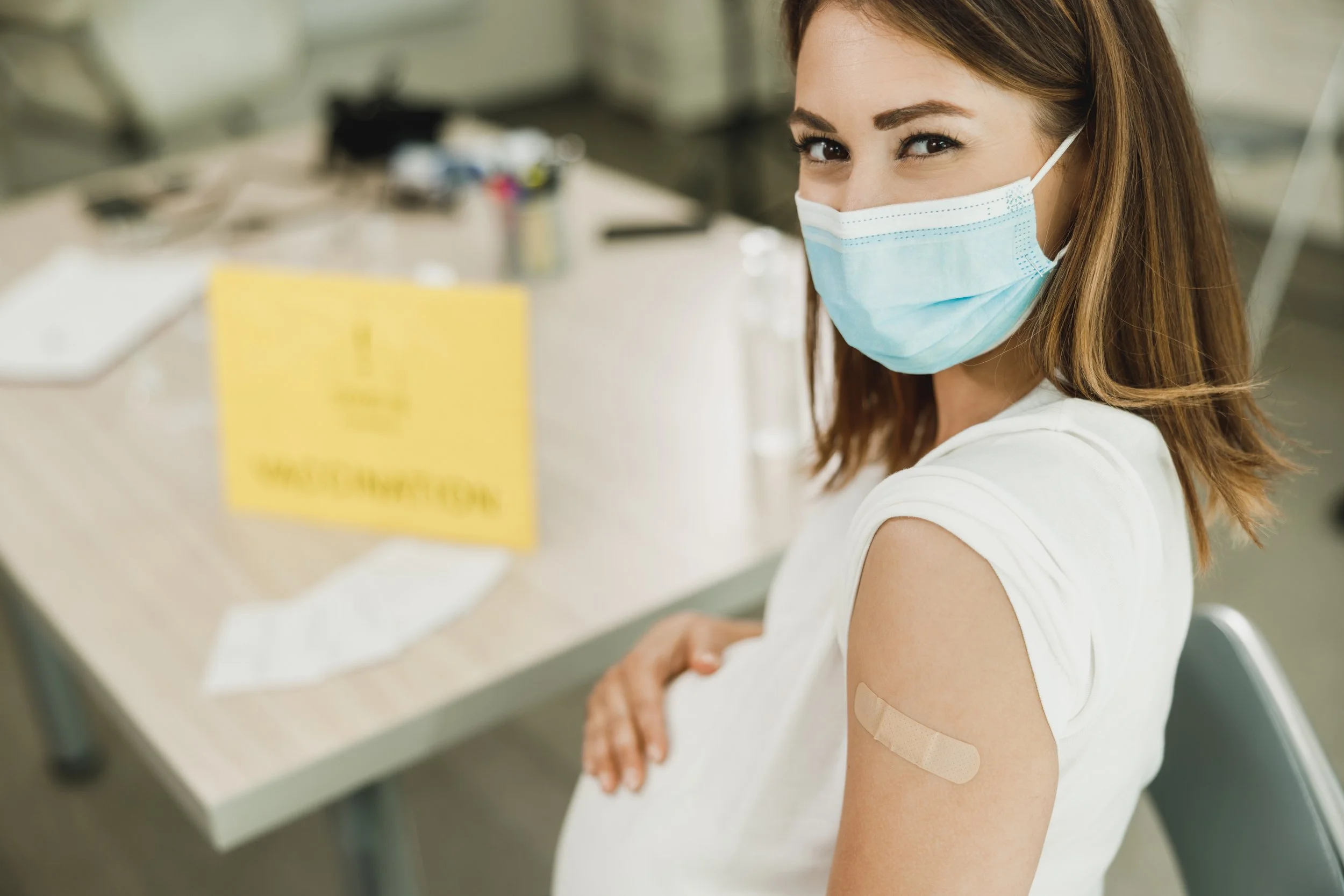
COVID-19 Vaccine
Learn how getting vaccinated during pregnancy helps to protect both you and your baby against serious illness caused by the COVID-19 virus.
Please note: We are dedicated to providing up-to-date and accurate COVID-19 information that reflects the current scientific consensus. As scientific knowledge is continually evolving, our content is subject to change as new research and data become available. For more information, please see our Terms of Use.
Quick Facts
-

COVID-19 spreads easily and can cause serious illness.
COVID-19 is caused by the SARS-CoV-2 virus. It spreads through coughing, sneezing, and close contact, and mainly affects the nose, throat, and lungs.
-

Pregnant people are at greater risk of serious illness.
Changes to your body during pregnancy, including your heart, lungs, and immune system, make you more likely to get seriously ill or need hospital care if you catch COVID-19.
-

mRNA COVID-19 vaccines are recommended during pregnancy.
mRNA COVID-19 vaccines, such as Pfizer and Moderna, are safe to receive at any time during pregnancy. The vaccine is given as a single injection in the upper arm.
-

Vaccination protects you from serious illness.
Getting an mRNA COVID-19 vaccine during pregnancy lowers your chances of getting very sick and needing care in a hospital or intensive care unit (ICU).
-
Vaccination also helps protect your baby.
When you get a COVID-19 vaccine during pregnancy, your body makes protective antibodies that pass through the placenta to your baby. These antibodies can help protect your baby against COVID-19 in their first few months of life.
-

mRNA COVID-19 vaccines are safe for you and your baby.
Millions of pregnant people have safely received COVID-19 vaccines. Research shows that mRNA vaccines do not increase the risk of miscarriage, preterm birth, or stillbirth, and cannot give you COVID-19.

About COVID-19
COVID-19 is an illness caused by a virus called SARS-CoV-2. COVID-19 mainly targets the respiratory system, which is the part of your body that helps you breathe. This includes your nose, throat, and lungs.
Signs and symptoms of COVID-19 can range from very mild to severe (serious). Some people may not even realize they're sick. Common symptoms include fever, cough, and difficulty breathing. Some people also lose their sense of taste or smell. In more serious cases, COVID-19 can lead to lung problems and other long-term health issues.
Many people with COVID-19 experience mild symptoms. However, COVID-19 can be more serious in pregnant individuals and people with pre-existing health conditions.
-
When a person with the disease coughs or sneezes, they let out tiny germ-filled drops into the air. If you breathe in these drops, you can catch COVID-19, too. COVID-19 can also spread if you touch a surface where the virus is present and then touch your face. A person with a COVID-19 infection can spread the virus to others even if they don’t have any symptoms.
-
During pregnancy, your body goes through many changes to nourish a growing baby. You are now breathing for two and pumping blood for two, so it’s harder for your body to fight off infections. These changes mean that you are more likely to get very sick from infections like COVID-19.
Compared to non-pregnant people, studies¹⁻² show that people who catch COVID-19 during pregnancy are:
More likely to be hospitalized with COVID-19
More likely to be admitted to an intensive care unit (ICU)
More likely to need special equipment like a ventilator to help them breathe
Getting COVID-19 in pregnancy can also increase the chances of premature birth (birth that happens before 37 weeks of pregnancy). This can happen even in cases where you only experience mild symptoms of COVID-19 and don’t need hospital care.¹
-
During pregnancy, your health and the health of your growing baby are closely connected. Staying as healthy as possible during pregnancy has important benefits for you and your baby.
Pregnancy causes changes in your body and immune system that can make it harder for you to fight off infections. This means you are more likely to get very sick and experience complications (problems) that can affect your pregnancy.³
For example, COVID-19 can make it harder for you to breathe, which can lower the amount of oxygen in your blood. During pregnancy, your baby depends on the oxygen in your blood for their own life. If there's less oxygen in your blood because you're having trouble breathing, your baby might not receive the amount of oxygen they need.
Issues like this can increase the risk of pregnancy-related complications like preterm birth (birth before 37 weeks of pregnancy).4-5 Babies born too early are at higher risk of health problems once they are born and also later in life.⁶
COVID-19 can also be a concern for your baby after they’re born. Babies can catch COVID-19 from family members and other close contacts who are infected. Some babies will get so sick from COVID-19 that they need medical treatment in a hospital.⁷
-
Getting vaccinated against COVID-19, including all recommended booster doses, during pregnancy is the best way to protect your baby in the first few months after they’re born.
Vaccines teach your body to spot and fight off harmful germs like COVID-19. When you get vaccinated, your body responds by making protective antibodies that defend you against the COVID-19 virus. During pregnancy, these protective antibodies pass through the placenta to your baby. This gives your baby some early protection against COVID-19 at birth and over the first few months of life when they are more likely to get very sick.
Getting vaccinated during pregnancy has important benefits for both you and your baby. Studies8-9 show that getting a COVID-19 vaccine in pregnancy can:
Lower the risk of getting a severe COVID-19 infection in pregnancy
Lower the risk of hospitalization from COVID-19 for babies under 6 months old
Lower the risk of preterm birth (birth before 37 weeks of pregnancy)
Research also shows that babies born to mothers who were vaccinated in pregnancy are less likely to test positive for COVID-19 in the first four months of life.10 There is also evidence that vaccinated mothers who breastfeed can pass protective antibodies to their newborn babies through breastmilk.11-13
COVID-19 Vaccination in Pregnancy
Learn how getting a COVID-19 vaccine during pregnancy can help protect both you and your baby from serious illness caused by the COVID-19 virus.
Video provided courtesy of the Immunising Pregnant Women and Infants Network (IMPRINT). Explore more IMPRINT videos and resources here.
About COVID-19 Vaccines
Health experts in Canada recommend that all pregnant people get vaccinated with an mRNA COVID-19 vaccine (like those from Pfizer-BioNTech and Moderna). These vaccines have the most research backing their safety and effectiveness for pregnant and breastfeeding/lactating individuals.¹³
mRNA COVID-19 vaccines work by instructing your body to make protective antibodies that can fight off the virus. This means that if you come into contact with the virus after getting vaccinated, your body will be better prepared to defend against it.
Research shows that mRNA COVID-19 vaccines do not increase the risk of miscarriage, preterm birth, or stillbirth and cannot give you or your baby COVID-19.⁸⁻⁹

-
mRNA COVID-19 vaccines work differently than other vaccines recommended in pregnancy. Instead of using dead parts of a germ like the flu and Tdap vaccines, mRNA COVID-19 vaccines use something called messenger RNA (mRNA). Think of mRNA as a set of instructions that teach your body how to make a harmless copy of a part of the virus.
Here’s how it works:
Coronaviruses, like the one that causes COVID-19, have crown-shaped spikes on their surface called spike proteins.14
The mRNA in the vaccine tells your cells how to make a harmless copy of this spike protein that's found on the surface of the COVID-19 virus.
After your cells finish making these protein copies, your body recognizes them as unwelcome intruders and starts to defend itself. It does this by making protective antibodies, which are ready to fight off the real COVID-19 virus if you ever get it.
After the vaccine has finished training your immune system to defend against the COVID-19 virus, your body naturally breaks down and gets rid of the vaccine ingredients, just like it gets rid of other materials it doesn’t need anymore. The vaccine ingredients are out of your body after several weeks.
mRNA COVID-19 vaccines are safe for pregnant people and their babies. Just like other recommended vaccines during pregnancy, mRNA COVID-19 vaccines do not contain a 'live' virus, so they can't cause a COVID-19 infection or harm you or your baby.
See video: How Vaccines Protect Moms and Babies
See infographic: How do mRNA COVID-19 vaccines work?
-
Vaccines teach your body to produce protective antibodies that defend against harmful viruses like COVID-19. During pregnancy, these protective antibodies will pass through the placenta to your baby. This gives your baby some early protection against COVID-19 at birth and over the first few months when they are more likely to get very sick. This amazing "transfer of protection" has been shown in studies that found protective antibodies in the umbilical cords of babies born to vaccinated mothers.15-16
It’s important to know that only the protective antibodies your body makes pass to your baby in significant amounts. These antibodies will protect your baby at birth and over the first few months until they are old enough to get their own vaccines. This means your baby will have a layer of protection when they need it the most.
Vaccine ingredients generally stay near the injection site, in your muscle and lymphatic system. Once the vaccine has finished training your immune system to defend against COVID-19, your body will naturally break down and get rid of the vaccine ingredients, just like it gets rid of other materials it doesn’t need anymore. The vaccine ingredients are out of your body after several weeks.
See video: How Vaccines Protect Moms and Babies
-
Current data tells us that getting the COVID-19 vaccine during pregnancy is effective at lowering your chances of becoming very sick or experiencing other serious health problems related to COVID-19.17
Studies18-22 show that getting vaccinated against COVID-19 during pregnancy helps to:
Lower your risk of getting very sick from COVID-19.
Lower the risk of preterm (early) birth, stillbirth, and low birth weight.
Lower the risk of hospitalization with COVID-19 for babies under six months old.
Vaccine Safety
-
Yes. mRNA COVID-19 vaccines are safe for pregnant people and can be given at any time during pregnancy or while breastfeeding.23 Just like the flu and Tdap vaccines recommended during pregnancy, mRNA COVID-19 vaccines do not contain a live virus, meaning they can’t give you a COVID-19 infection or cause any harm to you or your baby.
Evidence that COVID-19 vaccination is safe and effective during pregnancy comes from real-world data gathered from people who received the vaccine when they were pregnant.23
Millions of pregnant and breastfeeding people in Canada and around the world have safely received mRNA COVID-19 vaccines.23
Studies have found no increase in rates of pregnancy loss, preterm (early) birth, or stillbirth.23
There is also no scientific proof that COVID-19 vaccination causes infertility (problems trying to get pregnant) in men or women.24
That’s why health organizations from around the world, including the Society of Obstetricians and Gynaecologists Canada (SOGC) and the National Advisory Committee on Immunization (NACI) recommend that anyone who is pregnant, breastfeeding, or planning to have a baby should get vaccinated against COVID-19, including all recommended booster doses.25
-
No. Getting vaccinated against COVID-19 during pregnancy does not increase the risk of complications (problems) during pregnancy or birth. Studies26-28 show:
No increase in the risk of pregnancy loss (miscarriage)
No increase in the risk of preterm birth (birth that happens before 37 weeks of pregnancy)
No increase in the risk of stillbirth
No increase in the risk of low birth weight
On the other hand, catching a COVID-19 infection while you're pregnant does increase the risk of these serious problems. Studies have shown that having a COVID-19 infection during pregnancy can increase the risk of preterm (early) birth, low birth weight, and infant admission to a neonatal intensive care unit (NICU).29
Getting vaccinated during pregnancy is the best way to keep you and your baby safe from COVID-19. Remember, protection for you means protection for two!
-
No. There's no chance that you or your baby could catch the COVID-19 virus from the vaccine. mRNA COVID-19 vaccines do not contain a ‘live’ virus, so they can't cause the infection. Instead, they help teach your immune system to recognize and fight the virus, keeping you and your baby safe and protected.
When you get the COVID-19 vaccine, your body learns to defend itself against the virus. This process might cause some mild side effects like fever, tiredness, or soreness where the shot was given. But don't worry – these side effects are a normal sign that your body is building immunity (protection) against the virus. These symptoms usually go away on their own within a few days. It’s important to remember that these side effects are not the same as COVID-19 and do not mean that you have the virus.
See video: How Vaccines Protect Moms and Babies
-
The only medical reason to not get an mRNA COVID-19 vaccine is if you have had an anaphylactic reaction to a component of the vaccine in the past. Talk with your healthcare provider if you have had a serious reaction to the COVID-19 vaccine before.

Vaccine Reactions
Vaccines, like any medication, can sometimes cause side effects. Usually, these are mild—like a sore arm or feeling tired—and they disappear on their own in a few hours or days. These are normal as it shows that your body is working to build immunity (protection) against the disease. Most pregnant individuals who receive mRNA COVID-19 vaccines do not experience any serious problems. Common symptoms include soreness where the shot was given, feeling tired, muscle pain, and headaches.
Some studies have shown that pregnant people are more likely to report feeling pain where the shot was given compared to non-pregnant people.13 However, pregnant people are less likely to report side-effects like headaches, muscle pain and fever.13,30 Talk with your healthcare provider if you’re concerned about how the vaccine might affect you.
-
Some people will get some redness or soreness at the spot where the needle went in. This is called a ‘local reaction’. The redness and soreness will get better in a day or two. In the meantime, you can put a cool, damp cloth on the spot to soothe it, or take an over-the-counter pain medication, such as acetaminophen (Tylenol) if you feel you need to. Check with your healthcare provider before taking any other pain medications.
-
Some people may experience a headache after getting vaccinated. The headache will get better by itself, but you can take over-the-counter pain medication, such as acetaminophen (Tylenol), if you feel you need to. Check with your healthcare provider before taking any other pain medications.
-
Although less common than other symptoms like headache and soreness in the arm, fever has also been reported, especially after getting a second dose of a mRNA COVID-19 vaccine.13
Monitoring of more than 35,000 pregnant and breastfeeding people who received an mRNA COVID-19 vaccine found that less than 10% of participants reported experiencing a fever.31
If you have a fever after your vaccination, drink plenty of water and consider using some acetaminophen (Tylenol) to help bring the temperature down. Check with your healthcare provider before taking any other medications.
-
Research shows that mRNA COVID-19 vaccines do not increase the risk of pregnancy complications like pregnancy loss, stillbirth, preterm (early) birth, or low birth weight.
In very rare cases, someone might have a severe reaction like a high fever or anaphylaxis (a severe allergic reaction). Anaphylaxis can cause hives, difficulty breathing, and swelling around the mouth, including the throat, tongue, or lips. If you experience any of these symptoms, it’s important to get medical help immediately at your nearest emergency department or by calling 911.
Keep in mind that severe allergic reactions are very rare. Serious reactions generally happen shortly after receiving a vaccine and are treatable. This is why you will be asked to wait for at least 15 minutes after getting a vaccine before leaving a pharmacy or clinic. Healthcare providers are trained to respond to an anaphylactic reaction.
-
If your symptoms last longer than a couple of days, or if you are worried about how you feel after your vaccination, you can call your doctor or get help by calling the toll-free health information and advice phone service available in your province/territory:
British Columbia, Alberta, Saskatchewan, Ontario, Quebec, New Brunswick, Nova Scotia, Newfoundland and Labrador, New Brunswick, Prince Edward Island, the Yukon, the Northwest Territories: Call 811
Manitoba: Call 1-888-315-9257
Nunavut: Call 211
You can also get help by visiting your nearest emergency department or urgent care centre. If you develop any serious symptoms that you think could be an allergic reaction after your vaccination, call emergency services right away by dialling 911.
-
No, there is no evidence to suggest that COVID-19 vaccination causes fertility problems in men or women.32
Current research33-34 shows:
No link between COVID-19 vaccines and infertility (problems getting pregnant)
No link between COVID-19 vaccines and increased risk of miscarriage or stillbirth
No differences in the chances of conceiving a child between vaccinated and unvaccinated populations.
-
Results from recent studies35-37 show that some people who menstruate may experience some temporary changes in menstruation after receiving a COVID-19 vaccination.38 These include:
Menstrual periods lasting for a longer time than usual.
Less time between menstrual periods than usual.
Bleeding during menstrual periods that is heavier than usual.
These changes are usually small and fix themselves over time in 1 or 2 cycles.39 There are many ideas about why these changes happen, but the exact reasons are still unclear. According to the Society of Obstetricians and Gynaecologists of Canada (SOGC), many things can affect your period, like sleep, stress, sickness, what you eat, and how much you exercise.39 Regardless of these temporary changes in menstruation, there is no evidence that COVID-19 vaccination causes fertility problems.38
What we do know is that getting sick with COVID-19 can change your period, and these changes can last for a much longer time.39
Vaccine Timing
-
You can get the COVID-19 vaccine during any trimester of pregnancy or while breastfeeding. This includes booster doses when you are eligible to get them in your province. Ideally, you should get a booster dose about six months after your last COVID-19 vaccine. In some cases, getting a booster dose earlier may be recommended. Talk with your healthcare provider for more information on the best time to get vaccinated.
-
The protection you get from the COVID-19 vaccine may get weaker over time, so additional ‘booster’ doses are recommended to help strengthen this protection again.40 Ideally, you should get a booster dose about six months after your last COVID-19 vaccine. In some cases, getting a booster dose earlier may be recommended. Talk with your healthcare provider for more information on timing.
-
Choosing to wait until after your baby is born to get the COVID-19 vaccine means your baby won't be protected against COVID-19 at birth. If you get vaccinated while breastfeeding, your baby will get some antibodies from your breastmilk, but this protection isn't as strong as the protection they would get from the antibodies that cross the placenta during pregnancy. Your body also takes a couple of weeks to make these protective antibodies after you get the vaccine. This means your baby won’t have protection for at least the first few weeks after birth.
That's why getting the COVID-19 vaccine, along with the flu and Tdap vaccines, is strongly recommended during pregnancy. The protective antibodies you create are shared with your baby through the placenta, keeping them safe from the moment they're born. Studies have shown that babies born to mothers who received the COVID-19 vaccine in pregnancy have a lower risk of testing positive for COVID-19 during the first four months of life.10
-
Yes, you can get a COVID-19 vaccine at the same time as other vaccines, including the influenza (flu) and Tdap vaccines. The Society of Obstetricians and Gynaecologists of Canada (SOGC) recommends these vaccines for all pregnant individuals to reduce the risk of serious illness and hospitalization for themselves and their babies.
Additional Information
-
Getting vaccinated against COVID-19 during pregnancy is the best way to protect you and your baby. In addition to getting a COVID-19 vaccine, you can take certain steps to help reduce your risk of getting COVID-19, including:
Wearing a mask in public settings and when around others outside of your household
Washing your hands frequently with soap and water or using hand sanitizer
Maintaining physical distance from people who are not part of your household
Avoiding large gatherings or crowded indoor spaces
These actions are the most effective when combined with COVID-19 vaccination.
-
It’s a good idea for family members who will have close contact with your newborn baby to get vaccinated as well. This helps reduce the chance of your baby getting COVID-19 from family members or other caregivers. Talk to your doctor about COVID-19 vaccination for other members of your family.
-
Depending on where you live, you can get a COVID vaccine at your local pharmacy. Your healthcare provider may also offer vaccinations. It is recommended to check with your local health department or healthcare provider for more information on where to get vaccinated in your area.
British Columbia, Alberta, Saskatchewan, Ontario, Quebec, New Brunswick, Nova Scotia, Newfoundland and Labrador, New Brunswick, Prince Edward Island, the Yukon, the Northwest Territories: Call 811
Manitoba: Call 1-888-315-9257
Nunavut: Call 211

Real-world evidence shows that getting vaccinated in pregnancy is a safe and effective way to protect you and your baby from COVID-19.
Key Facts
-
McClymont E, Albert AY, Alton GD, Boucoiran I, Castillo E, Fell DB, et al. Association of SARS-CoV-2 infection during pregnancy with maternal and perinatal outcomes. JAMA. 2022;327(20):1983–91.
Smith ER, Oakley E, Grandner GW, Perinatal COVID PMA Study Collaborators. Adverse maternal, fetal, and newborn outcomes among pregnant women with SARS-CoV-2 infection: an individual participant data meta-analysis. BMJ Glob Health. 2023;8:e009495.
Chen M, Zeng J, Liu X, et al. Changes in physiology and immune system during pregnancy and coronavirus infection: A review. Eur J Obstet Gynecol Reprod Biol. 2020;255:124–8. doi:10.1016/j.ejogrb.2020.10.035
Wang B, Zeng H, Liu J, Sun M. Effects of prenatal hypoxia on nervous system development and related diseases. Front Neurosci. 2021;15:755554.
Karasek D, Baer RJ, McLemore MR, Bell AJ, Blebu BE, Casey JA, et al. The association of COVID-19 infection in pregnancy with preterm birth: a retrospective cohort study in California. Lancet Reg Health Am. 2021;2:100027.
Pravia CI, Benny M. Long-term consequences of prematurity. Cleve Clin J Med. 2020;87(12):759. doi:10.3949/ccjm.87a.19108
Mayo Clinic. COVID-19 in babies and children [Internet]. 2023 Nov 3 [cited 2025 May 30]. Available from: https://www.mayoclinic.org/diseases-conditions/coronavirus/in-depth/coronavirus-in-babies-and-children/art-20484405
Halasa NB, Olson SM, Staat MA, Newhams MM, Price AM, Pannaraj PS, et al. Maternal vaccination and risk of hospitalization for Covid-19 among infants. N Engl J Med. 2022;387(2):109–19.
Hui L, Marzan MB, Rolnik DL, Potenza S, Pritchard N, Said JM, et al. Reductions in stillbirths and preterm birth in COVID-19–vaccinated women: a multicenter cohort study of vaccination uptake and perinatal outcomes. Am J Obstet Gynecol. 2022.
Carlsen EØ, Magnus MC, Oakley L, et al. Association of COVID-19 vaccination during pregnancy with incidence of SARS-CoV-2 infection in infants. JAMA Intern Med. 2022;182(8):825–31. doi:10.1001/jamainternmed.2022.2442
Perl SH, Uzan-Yulzari A, Klainer H, Asiskovich L, Youngster M, Rinott E, et al. SARS-CoV-2–specific antibodies in breast milk after COVID-19 vaccination of breastfeeding women. JAMA. 2021;325(19):2013–4.
Drugs and Lactation Database (LactMed®) [Internet]. Bethesda (MD): National Institute of Child Health and Human Development; 2006–. COVID-19 Vaccines. [updated 2024 Feb 15; cited 2025 May 30]. Available from: https://www.ncbi.nlm.nih.gov/books/NBK565969/
Poliquin V, Castillo E, Boucoiran I, Watson H, Yudin M, Money D, et al. SOGC statement on COVID-19 vaccination in pregnancy. Ottawa (ON): Society of Obstetricians and Gynaecologists of Canada; 2021.
Health Canada. COVID-19 mRNA vaccines. Ottawa, ON: Government of Canada; 2022 [Available from: https://www.canada.ca/en/health-canada/services/drugs-health-products/covid19-industry/drugs-vaccines-treatments/vaccines/type-mrna.html] accessed July 8 2023.
Watanabe A, Yasuhara J, Iwagami M, et al. Peripartum outcomes associated with COVID-19 vaccination during pregnancy: A systematic review and meta-analysis. JAMA Pediatr. 2022;176(11):1098–106. doi:10.1001/jamapediatrics.2022.3456 https://doi.org/10.1001/jamapediatrics.2022.3456
Prahl M, Golan Y, Cassidy AG, et al. Evaluation of transplacental transfer of mRNA vaccine products and functional antibodies during pregnancy and infancy. Nat Commun. 2022;13:4422. doi:10.1038/s41467-022-32188-1
Juliá-Burchés C, Martínez-Varea A. An Update on COVID-19 Vaccination and Pregnancy. J Pers Med. 2023;13(5). 10.3390/jpm13050797.
Badell ML, Dude CM, Rasmussen SA, Jamieson DJ. COVID-19 vaccination in pregnancy. BMJ. 2022;378:e069741. doi:10.1136/bmj-2021-069741
Goldshtein I, Nevo D, Steinberg DM, et al. Association between BNT162b2 vaccination and incidence of SARS-CoV-2 infection in pregnant women. JAMA. 2021. doi:10.1001/jama.2021.11035
Morgan JA, Biggio JR, Martin JK, et al. Maternal outcomes after severe acute respiratory syndrome coronavirus 2 (SARS-CoV-2) infection in vaccinated compared with unvaccinated pregnant patients. Obstet Gynecol. 2022;139(1):107–9. doi:10.1097/AOG.0000000000004621
Piekos SN, Hwang YM, Roper RT, Sorensen T, Price ND, Hood L, et al. Effect of COVID-19 vaccination and booster on maternal–fetal outcomes: A retrospective cohort study. Lancet Digit Health. 2023;5(9):e594–e606.
Halasa NB, Olson SM, Staat MA, Newhams MM, Price AM, Boom JA, et al. Effectiveness of maternal vaccination with mRNA COVID-19 vaccine during pregnancy against COVID-19–associated hospitalization in infants aged <6 months—17 states, July 2021–January 2022. MMWR Morb Mortal Wkly Rep. 2022;71(7):264.
Fell DB, Dimanlig-Cruz S, Regan AK, Håberg SE, Gravel CA, Oakley L, et al. Risk of preterm birth, small for gestational age at birth, and stillbirth after COVID-19 vaccination during pregnancy: population based retrospective cohort study. BMJ. 2022;378:e071416. doi:10.1136/bmj-2022-071416
Zaçe D, La Gatta E, Petrella L, Di Pietro ML. The impact of COVID-19 vaccines on fertility: A systematic review and meta-analysis. Vaccine. 2022;40(42):6023–34. doi:10.1016/j.vaccine.2022.09.019
Government of Canada. Vaccination and pregnancy: COVID-19 [Internet]. 2022 Sep 9 [cited 2025 May 30]. Available from: https://www.canada.ca/en/public-health/services/immunization-vaccines/vaccination-pregnancy-covid-19.html
Juliá-Burchés C, Martínez-Varea A. An update on COVID-19 vaccination and pregnancy. J Pers Med. 2023;13(5):797. doi:10.3390/jpm13050797
Prasad S, Kalafat E, Blakeway H, et al. Systematic review and meta-analysis of the effectiveness and perinatal outcomes of COVID-19 vaccination in pregnancy. Nat Commun. 2022;13:2414. doi:10.1038/s41467-022-30052-w
Ma Y, Deng J, Liu Q, Du M, Liu M, Liu J. Effectiveness and safety of COVID-19 vaccine among pregnant women in real-world studies: A systematic review and meta-analysis. Vaccines (Basel). 2022;10(2):246. doi:10.3390/vaccines10020246
ImmunizeBC. Is the COVID-19 vaccine safe for pregnant people, people who are planning a pregnancy, and people who are breastfeeding? [Internet]. 2023 Oct 10 [cited 2025 May 30]. Available from: https://immunizebc.ca/ask-us/questions/do-people-who-are-pregnant-trying-get-pregnant-or-breastfeeding-have-safety
Kalafat E, Heath P, Prasad S, O’Brien P, Khalil A. COVID-19 vaccination in pregnancy. Am J Obstet Gynecol. 2022;227(2):136–47. doi:10.1016/j.ajog.2022.05.020
Provincial Council for Maternal and Child Health. I am pregnant or breastfeeding. Should I get the COVID-19 vaccine? [Internet]. 2022 Jan 25 [cited 2025 May 30]. Available from: https://www.pcmch.on.ca/wp-content/uploads/2022/02/PCMCH-COVID-19-Vaccine-Patient-Information-Sheet-2022_01_25_ENGLISH.pdf
Zaçe D, La Gatta E, Petrella L, Di Pietro ML. The impact of COVID-19 vaccines on fertility: A systematic review and meta-analysis. Vaccine. 2022;40(42):6023–34. doi:10.1016/j.vaccine.2022.09.019
Wesselink AK, Hatch EE, Rothman KJ, Wang TR, Willis MD, Yland J, et al. A prospective cohort study of COVID-19 vaccination, SARS-CoV-2 infection, and fertility. Am J Epidemiol. 2022;191(8):1383–95.
Wong Y, Elwood C, Money D, Dunne C. Myths versus facts: COVID-19 vaccine effects on pregnancy, fertility, and menstruation. BC Med J. 2022;64(8):354–6.
Edelman A, Boniface ER, Benhar E, Han L, Matteson KA, Favaro C, et al. Association between menstrual cycle length and coronavirus disease 2019 (COVID-19) vaccination: A U.S. cohort. Obstet Gynecol. 2022;139(4):481–9.
Nazir M, Asghar S, Rathore MA, Shahzad A, Shahid A, Khan AA, et al. Menstrual abnormalities after COVID-19 vaccines: A systematic review. Vacunas. 2022;23(3):179–87.
Trogstad L. Increased occurrence of menstrual disturbances in 18- to 30-year-old women after COVID-19 vaccination [Preprint]. SSRN. 2022. Available from: https://ssrn.com/abstract=3998180
Gibson EA, Li H, Fruh V, Gabra M, Asokan G, Jukic AMZ, et al. COVID-19 vaccination and menstrual cycle length in the Apple Women's Health Study. medRxiv [Preprint]. 2022. doi:10.1101/2022.07.07.22277371
Society of Obstetricians and Gynaecologists of Canada. COVID-19 vaccines: Myths and facts [Internet]. 2021 [cited 2025 May 30]. Available from: https://sogc.org/common/Uploaded%20files/Covid%20Information/FAQ_Myth-Fact_17Sept2021.pdf
Government of Canada. COVID-19 vaccines: Canadian Immunization Guide for health professionals [Internet]. 2023 Dec 15 [cited 2025 May 30]. Available from: https://www.canada.ca/en/public-health/services/publications/